The professional kitchen floor is always greasy: the 3-step method
You wash it every evening and by morning it is slippery again. The problem is not frequency: it is the grease film that wrong washing spreads instead of removing. Here is the right three-step method.
Redazione Lüster — 4F Services · Verified on: 2026-09-12
In a professional kitchen, a greasy floor is not just an image problem: it is the number one slip hazard for staff and one of the most contested non-conformities in hygiene inspections. Yet most kitchens wash it every day. If your floor "turns greasy again" within hours, the problem is not how often you wash, but how.
Why the floor stays greasy even after washing
Kitchen grease — frying oil, cooking vapours, sauces — settles in ultra-thin layers that literally bake onto the floor in the warm environment. Hot water and any generic detergent do not remove it: they partially emulsify it and spread it, creating that uniform film you feel under your soles. Three typical mistakes make everything worse: dosing the detergent "by eye" below the effective dose, washing with yesterday's dirty mop, and rinsing little or not at all — the alkaline residues left on the surface then trap the new dirt.
Step 1 — The deep clean: removing the built-up film
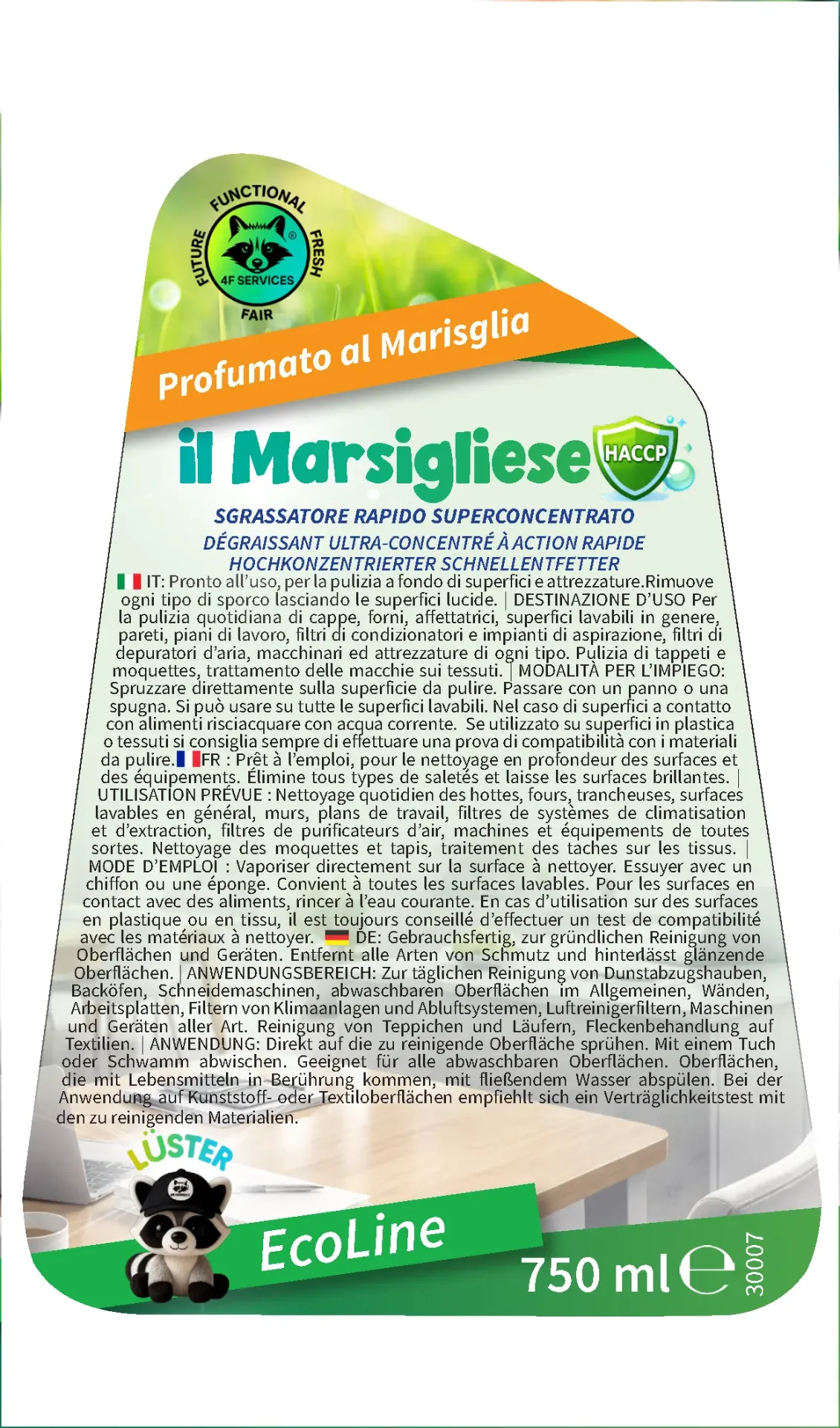
First, reset to zero. You need a concentrated alkaline detergent at intensive dose, contact time and mechanical action: on porcelain stoneware, concrete or resin, a product like Rocket at strong dilution (1:50, i.e. 20 ml per litre) or industrial dose (1:20 for the worst build-up, for example under the fryer), applied, left to act for a few minutes, worked with a single-disc machine or scrubber-dryer and rinsed abundantly. For localised spots and critical points, a super-active degreaser used pure or at 1:5 (for example Il Marsigliese) does the fine work. After the first real deep clean, you feel the difference underfoot: the floor "grips" again.
Step 2 — Daily maintenance at the right dose
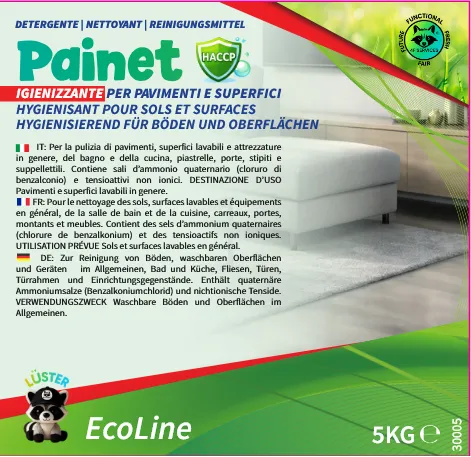
With the film gone, the evening wash becomes effective again: floor detergent at the ordinary dilution from the data sheet (for Rocket 1:100; for washing with a hygienising action in a single pass, Painet reaches 1:200), a clean mop and — the detail that changes everything — a double bucket or frequent water changes: grey greasy water is the vehicle with which you re-soil. With a scrubber-dryer: empty and rinse the recovery tank at the end of the shift, otherwise the next day's first pass redeposits last night's grease.
Step 3 — The rules that keep the result
- Mops and cloths dedicated to the kitchen, washed at the end of the shift: never the ones from dining rooms or washrooms.
- Immediate action on oil spills: absorb first, then wash — spreading it with the mop only enlarges it.
- Scheduled deep cleaning: weekly in cooking areas, monthly elsewhere, recorded on the HACCP cleaning plan.
- Always a measured dose: dosing unit or measuring cup, not the cap. Under-dosing smears, over-dosing leaves slippery residues.
The check that matters: the sole test
After washing, walk on the dry floor in work shoes: if it "squeaks" and grips, it is clean; if it slides or looks soapy-shiny, film is still there. It is the same check used to assess slip risk — and the one the inspector does with his eyes before even looking at the cleaning log. If after the deep clean the problem persists in localised spots, the Product Finder helps you understand whether a different chemistry or mechanical support is needed.
Source and references: Schede tecniche (FT) e schede di sicurezza (SDS) Lüster dei prodotti citati; buone pratiche di igiene HACCP per le cucine professionali.
Try the tool linked to this article
This article is for information only and does not replace the product label and Safety Data Sheet (SDS), which remain the only binding reference. Before use, always read the label and SDS on the nav.documents
The products mentioned in this article