Hard water in Switzerland: what changes when you wash
In much of Switzerland the water is rich in limescale. Here is what happens inside the dishwasher and on surfaces, how to recognise the signs and why the right dosage depends on your water hardness.
Redazione Lüster — 4F Services · Verified on: 2026-09-12
Swiss drinking water is among the best in the world. But for washing — dishes, surfaces, machines — another property matters: hardness. And that is where many cleaning problems start, without anyone noticing.
What hard water is
Hardness measures the amount of calcium and magnesium dissolved in the water, expressed in French degrees (°fH): below about 15 °fH water is soft, between 15 and 25 °fH medium, above 25 °fH hard. In Switzerland the value changes from municipality to municipality, depending on the rock the water flows through: where the ground is calcareous — as in Ticino and many parts of the Plateau — the water arrives hard or very hard. Your local water utility publishes the exact value for your address.
Signs you are washing with hard water
- White film on glasses and cups: that dull haze visible against the light is not leftover dirt — it is limescale deposited during drying.
- Scale inside the dishwasher: heating elements, walls and spray arms collect mineral deposits; the machine performs worse and consumes more.
- The detergent never seems to be enough: part of the active ingredient is captured by calcium before it can even clean.
- Rinse aid no longer dries evenly: drops and streaks remain even with a full dispenser.
- Taps, showers and worktops with deposits that return a few days after cleaning.
Why limescale slows the detergent down
Calcium and magnesium ions bind part of the washing agents: with hard water, the same dose achieves less. On top of that, limescale deposited on surfaces holds dirt and residues — the film you see on dishes and feel as roughness. It is not a defect of the detergent: it is the chemistry of the water. That is why professional technical data sheets state different dosages for soft, medium and hard water — and why dosing "by eye" almost always ends in waste or poor results.
What to do in practice
- Dose according to hardness: Lüster technical data sheets state the dose for soft, medium and hard water. You can find your hardness on your water utility's website or with test strips.
- Keep the rinse aid adjusted: with hard water it decides whether dishes come out shiny or covered in streaks.
- Descale the machine regularly: a periodic cycle with a specific descaler keeps heating elements and circuits clean, before limescale becomes damage.
- Check the softener salt, if the machine uses it: the first line of defence in hard-water areas.
Products designed for the water you have here
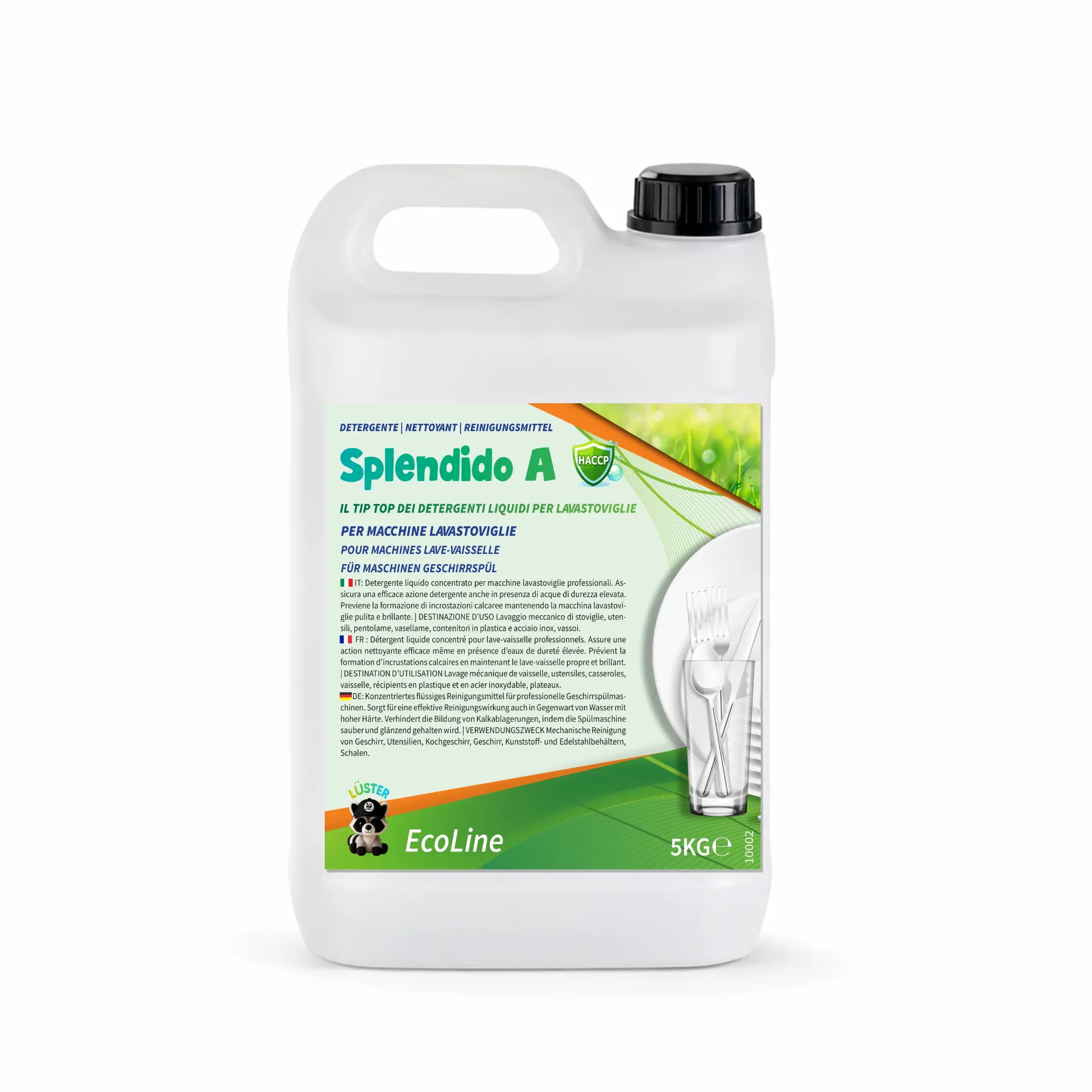
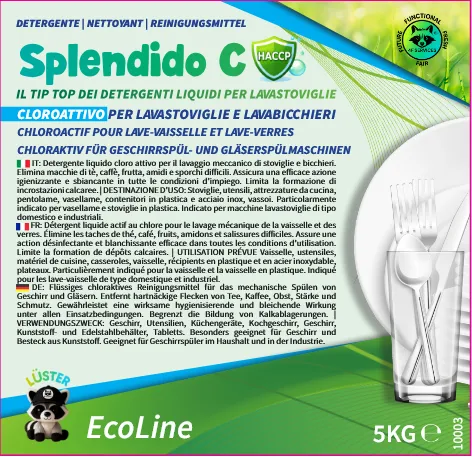
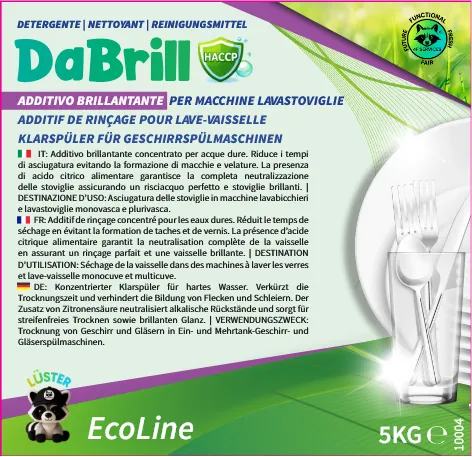
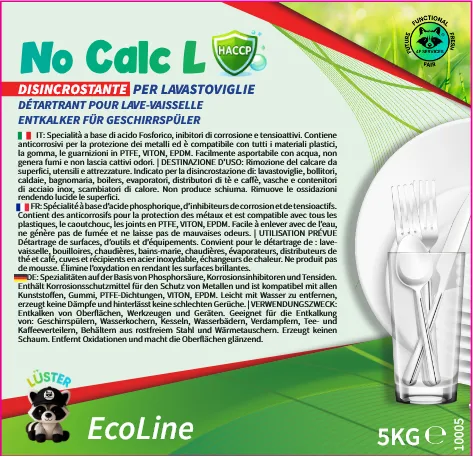
Lüster detergents are formulated in Italy and tested in Switzerland precisely on hard water: that is why the dosages in the technical data sheets account for hardness. For the dishwasher the system is complete: the detergent (Splendido A or Splendido C) with doses graduated by hardness, the DaBrill rinse aid for streak-free drying and the periodic descaler No Calc L for machine maintenance. You will find technical and safety data sheets on the Documents page, and the right dose calculation in the User Guide.
Source and references: Durezza dell'acqua: dati dei gestori idrici comunali e SVGW (Società svizzera dell'industria del gas e delle acque). Dosaggi e rese: schede tecniche Lüster (FT) dei prodotti citati.
Try the tool linked to this article
This article is for information only and does not replace the product label and Safety Data Sheet (SDS), which remain the only binding reference. Before use, always read the label and SDS on the nav.documents
The products mentioned in this article