
Food-contact surfaces taking too long to reuse? Common mistakes with hygienising cleaners and how Sanid helps
Slow turnaround, unnecessary rinsing and poor technique create delays. Here are common mistakes and how Sanid helps solve them.
Mistake 1: choosing products that slow down service
One of the most common issues in food areas is using products that do not match the pace of the operation. If a surface stays out of use for too long, teams may postpone the task or apply it inconsistently.
Sanid is designed to reduce that problem: it dries in a few seconds and is ready to use. On tables, worktops and chopping boards, it supports quick intervention without adding unnecessary steps to the routine.
Mistake 2: adding unnecessary rinsing steps
Another frequent mistake is assuming that every food-contact surface treatment must always be followed by rinsing. This adds time, increases workload and makes organisation more difficult during busy periods.
Sanid is intended for no-rinse use on food-contact surfaces. In practical terms, that helps simplify daily procedures and keeps workflows more efficient where speed and order both matter.
Mistake 3: not respecting contact time
Spraying and wiping off immediately is a typical error when staff are under pressure. However, contact time is part of the correct method. If it is ignored, the process becomes less consistent and harder to standardise.
With Sanid, the instruction is clear: 30 seconds to 2 minutes, with intense use applied neat and left for 2 minutes. Clear directions make it easier for teams to work consistently and support HACCP-oriented routines.
Mistake 4: using poor cloth control or weak application routines
Even the right hygienising cleaner can underperform if staff use an unclean cloth or leave visible residues on the surface before treatment. In professional kitchens, these method errors often lead to rework and lost time.
Sanid works best within a simple but controlled routine: even spraying, correct contact time and removal with a clean microfibre cloth. This is a practical approach for maintaining dependable daily hygiene on food-contact surfaces.
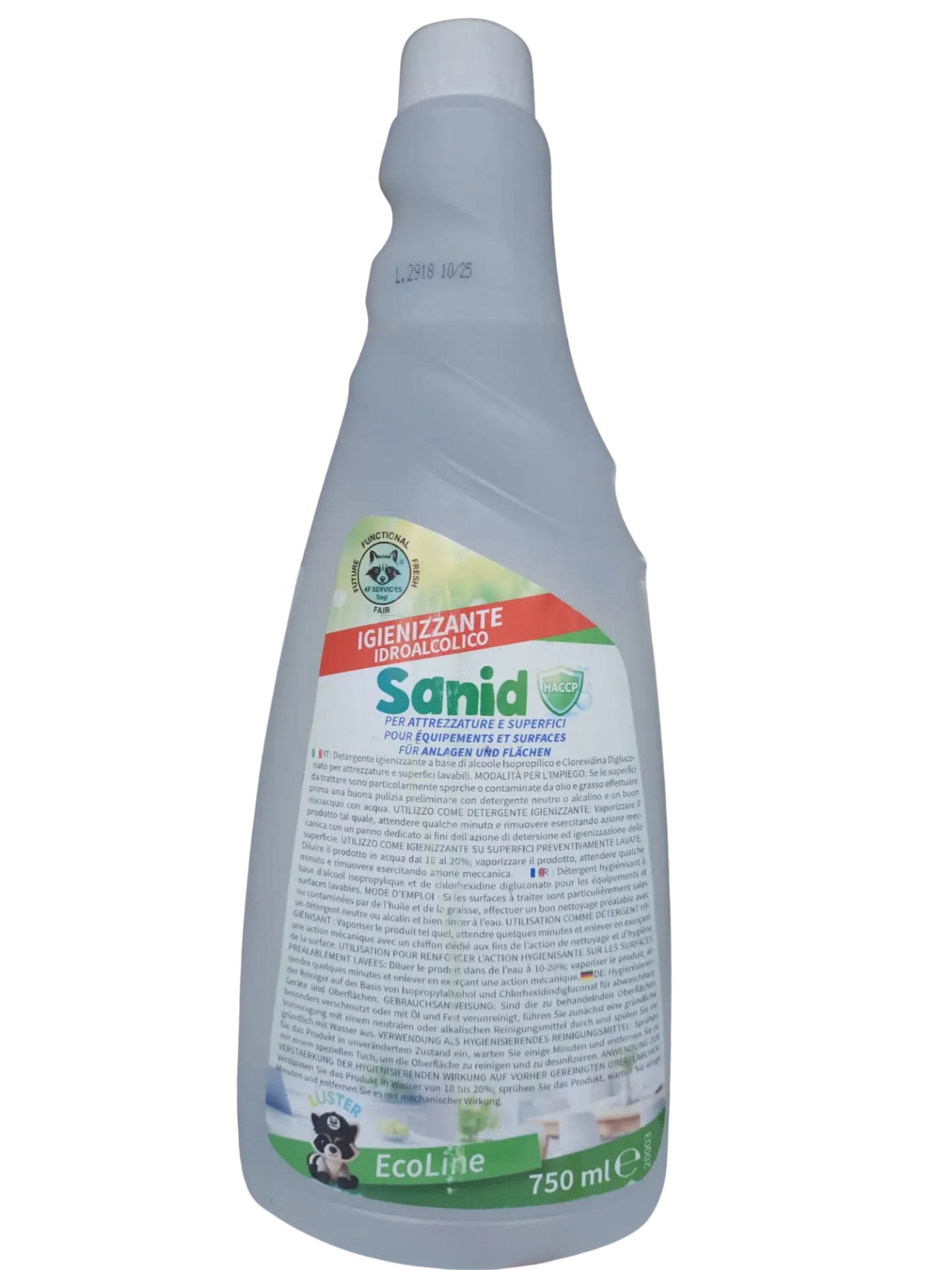
FAQ
What is the most common mistake with a ready-to-use hygienising cleaner?
A very common mistake is not allowing the stated contact time. With Sanid, the indicated contact time is from 30 seconds to 2 minutes.
Can Sanid help speed up kitchen workflows?
Yes. It dries in a few seconds and requires no rinsing on food-contact surfaces, helping reduce unnecessary steps.
Which surfaces is Sanid intended for?
Sanid is intended for food-contact surfaces such as tables, worktops and chopping boards.