
Professional kitchen cleaning: the HACCP guide in practice
Work surfaces, ovens, floors and equipment: how to organise the cleaning of a professional kitchen according to HACCP principles, with the right products and dilutions.
HACCP in brief: why cleaning must be documented
HACCP means hazard analysis and critical control points: in practice, anyone working with food must prove they clean in a planned, verifiable way. 'Cleaning a lot' is not enough: you need a written plan stating what, when, with which product and who checks.
The inspector does not ask for a fragrant kitchen: they ask for the cleaning log and the safety data sheets of the chemical products. Both must be ready and up to date.
The four zones to cover every day
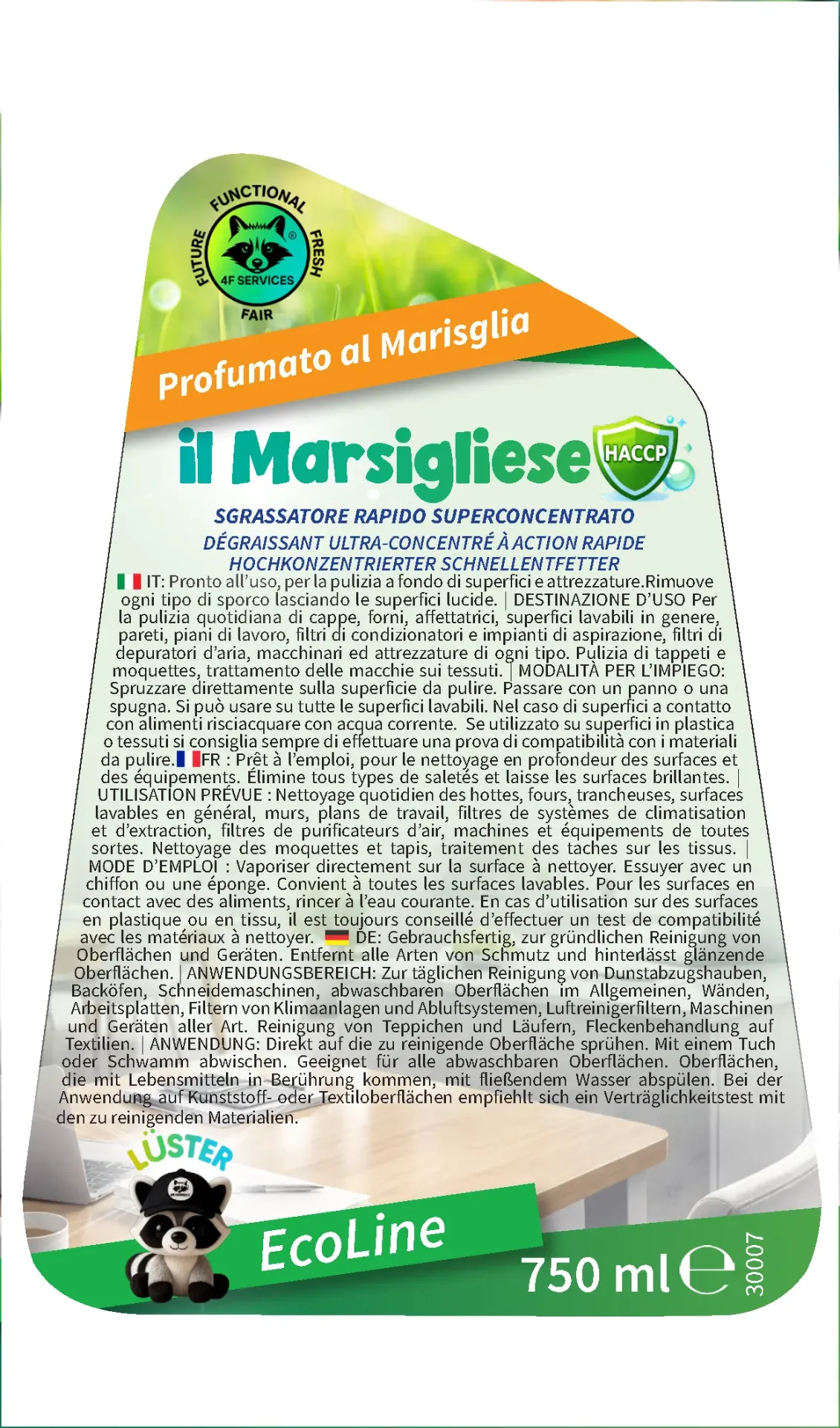
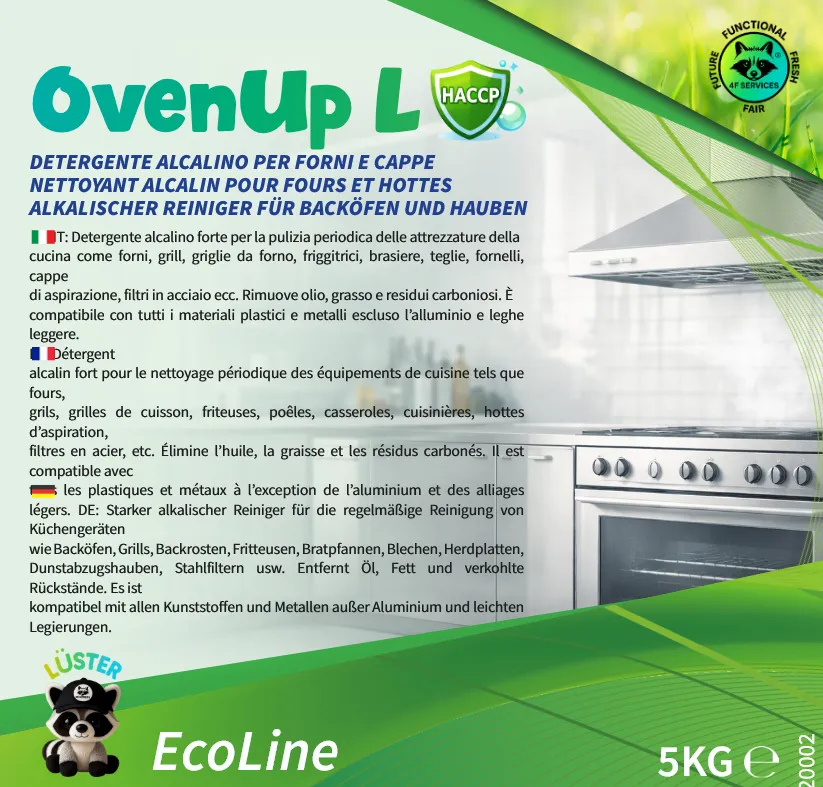
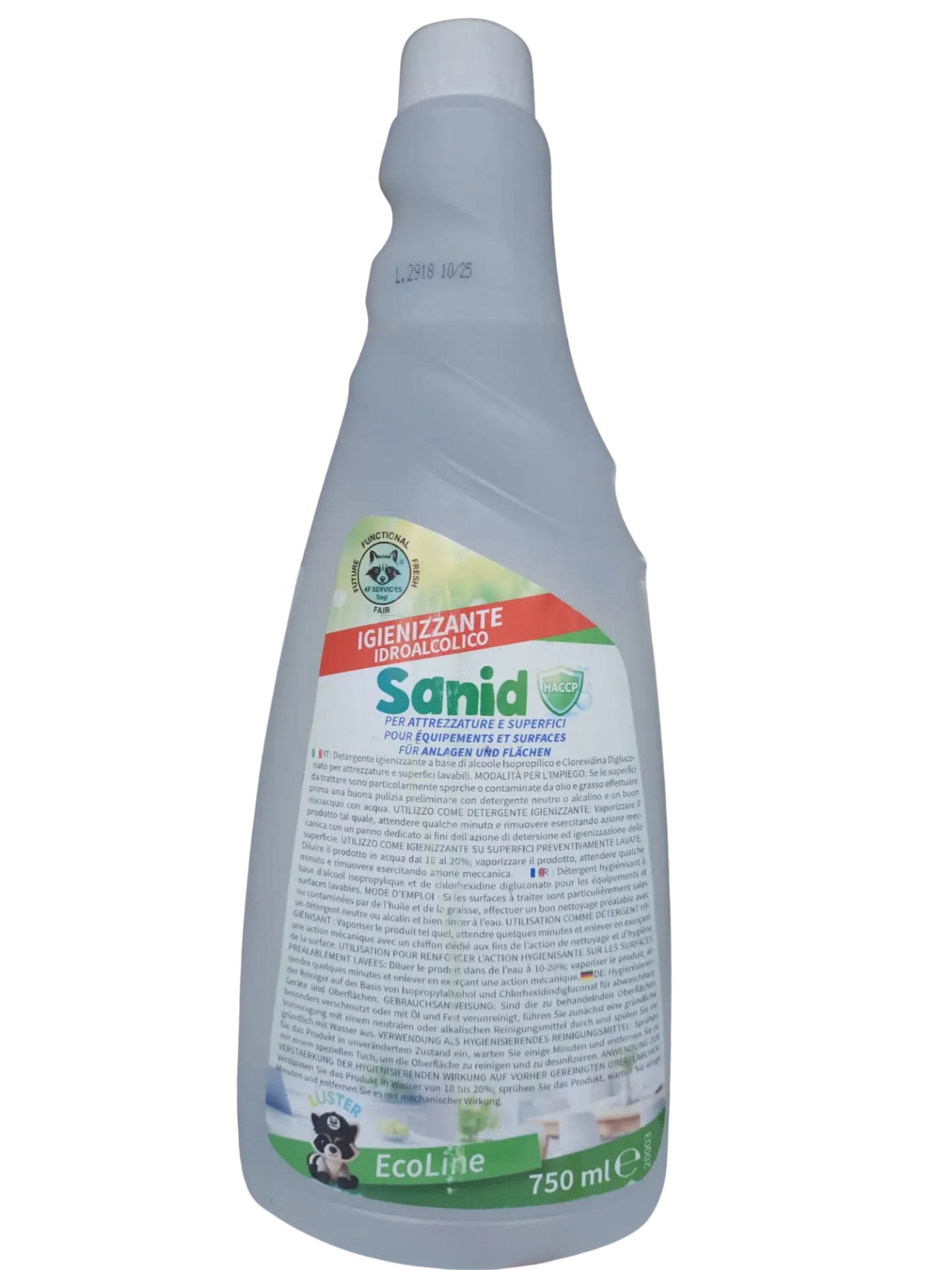
Surfaces and equipment in contact with food: ready-to-use food-safe degreaser like Il Marsigliese, then rinse with drinking water. Ovens and griddles: a specific strong alkaline product like OvenUp L, at the end of service, left to act on baked-on grease. Floors: degreasing floor cleaner at the correct dilution, with a 'wet floor' sign. Sanitary and staff areas: a hygiene detergent like Sanid.
Baked-on grease: the real battle
Baked-on grease on ovens, griddles and fryers is where almost all cleaning plans fail: it needs high alkalinity, temperature and contact time. Spray at the end of service on the still-warm surface (50–60 °C), leave for 5–10 minutes, remove with a spatula and rinse. Never leave the oven 'until the weekend': carbonised grease takes twice the work.
The cleaning log: simple but alive
A table with zone, product, dilution, frequency, responsible person and signature is enough for most businesses. Hang it in the kitchen and actually fill it in: a completed log is worth more than any certificate. Lüster technical and safety datasheets can be downloaded in 4 languages from each product page — print them and attach them to the log.
FAQ
Are Lüster detergents suitable for food contact?
Surfaces in contact with food must always be rinsed with drinking water after treatment, as per HACCP good practice. Every Lüster datasheet shows instructions and dilutions: follow them and document them in the plan.
How often should the professional oven be degreased?
Ideally every day at the end of service with a specific product (OvenUp L) on the warm surface. The weekly 'deep clean' is not enough if grease carbonises during the week: 5 minutes a day saves hours of catch-up.
Is staff training on chemicals required?
Yes, it is required by good practice and by the employer: anyone using professional chemical products must know dilutions, PPE and risks. With the Lüster Method we train your team in 15 minutes, free, with materials in 4 languages.