
Sanitising cold rooms and food counters: the HACCP guide
Cold rooms and display counters are the most inspected points in health checks. Here is the correct plan: food-contact-safe products, frequencies and the mistakes that fail swab tests.
Why cold alone is not enough
It is the most common mistake: thinking that the cold room's 4 °C 'kills bacteria'. Cold slows growth, but moulds and psychrotrophic bacteria (like Listeria) grow perfectly well at fridge temperature — especially on seals, drains and shelves where condensation and organic residues settle.
Moreover, the food counter works continuously: cold cuts, cheeses and preparations alternate on the same surfaces. Without daily sanitising, the cross-contamination risk is real — and the authorities' swabs prove it.
The right products for food contact
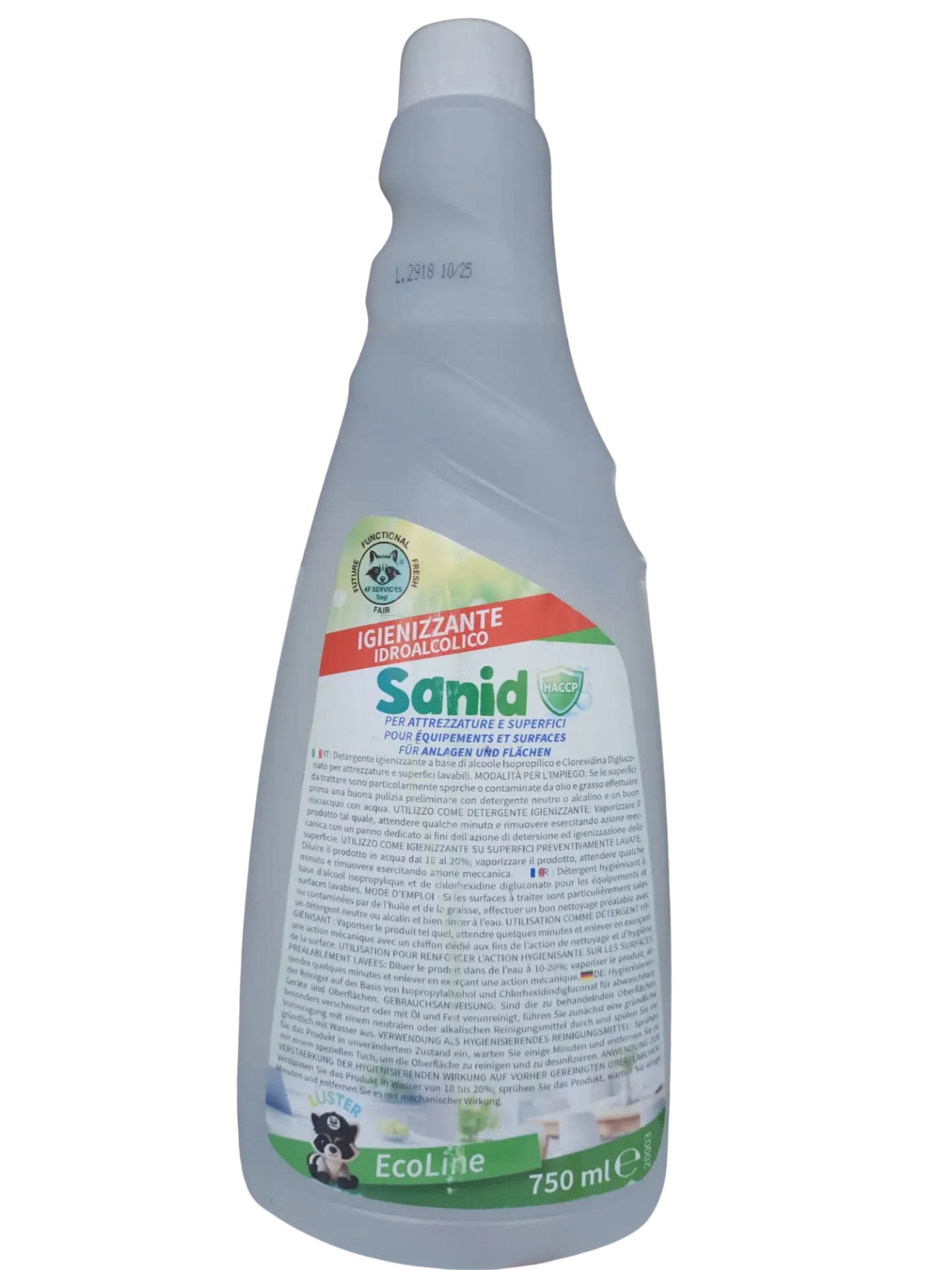
Two rules: only products suitable for food-contact surfaces and rinsing with drinking water where required. For quick daily sanitising of counters, shelves and handles use a fast-evaporating alcohol-based detergent like Sanid: sprayed on a cloth, it works in seconds and leaves no residue.
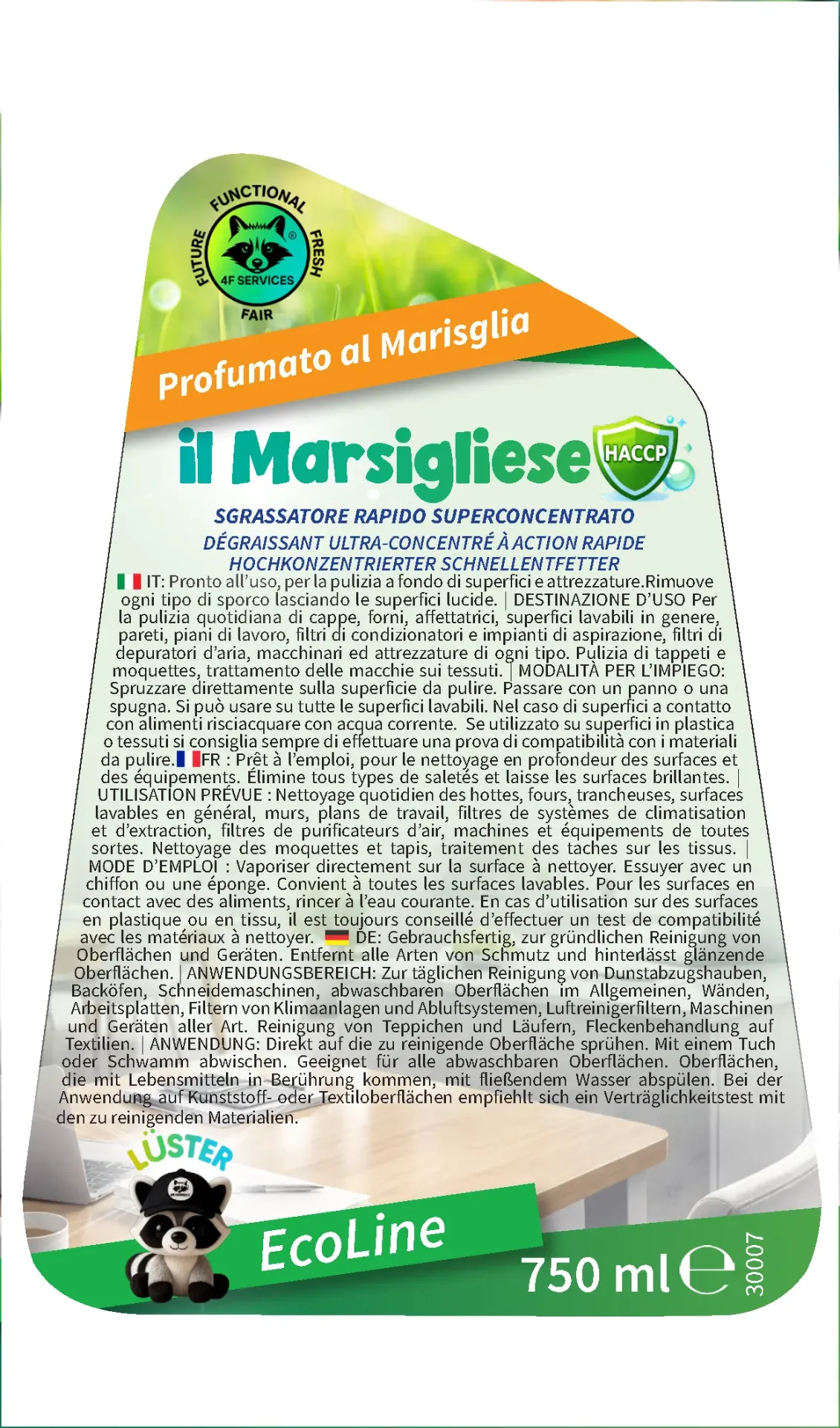
For the weekly degreasing of cold rooms, floors and equipment you need an alkaline food-grade detergent like Il Marsigliese: it removes fats and organic residues — the bacteria's 'food'. Degrease first, sanitise after — never the other way round.
The weekly plan that passes inspections
EVERY DAY at closing: sanitise counters, worktops, handles and scales with Sanid. EVERY WEEK: empty the cold room in rotation, degrease shelves and floor with Il Marsigliese, sanitise, check seals and condensate drains. EVERY MONTH: deep check of seals (black mould = replace), evaporator fans and reference thermometer.
Record everything in the HACCP plan: date, product, dilution, responsible person. A completed log is worth more than any product during an inspection.
The 4 mistakes that fail swab tests
1) Sanitising without degreasing first: grease shields bacteria from the disinfectant. 2) Using bleach on food-contact surfaces without perfect rinsing: residues and odours contaminate food. 3) 'All-purpose' cloths travelling between toilet and counter: guaranteed cross-contamination — use colour-coded cloths. 4) Ignoring door seals: they are the first place swabs find mould.
FAQ
Is Sanid suitable for food-contact surfaces?
Yes: it is a fast-evaporating alcohol-based detergent designed for counters, shelves and food equipment. Use it sprayed on a clean cloth; always follow the technical datasheet downloadable from the product page for directions.
How often should the cold room be sanitised?
Contact surfaces every day at closing; the full room (shelves, floor, seals) at least weekly with rotation emptying; deep check of seals and fans monthly.
What do health authorities check in a cold room?
Recorded temperature, documented cleaning (HACCP log), condition of seals and drains, separation of raw and cooked food, and swabs on contact surfaces. A written, regularly completed plan is the first thing they ask for.