
How to remove bathroom limescale with hard water
In Ticino and much of Switzerland the water is hard: dull taps, white shower glass and greyed sanitary ware. Here is how to dissolve limescale without damaging surfaces.
Why limescale is so stubborn in Switzerland
The water in Ticino and many Swiss regions is among the hardest in Europe: every evaporation leaves a trace of calcium carbonate. On taps, shower glass and ceramics a film forms that all-purpose cleaners cannot dissolve.
Limescale is alkaline: dissolving it requires a specific acidic product with the right strength and contact time.
The method: acidic product + contact time
1) Spray the descaler on the dry or slightly damp surface. 2) Leave for 2–5 minutes: you will see the limescale dissolve (slight fizzing). 3) Work with a non-abrasive sponge. 4) Rinse thoroughly and dry with microfibre: drying is the secret against new stains.
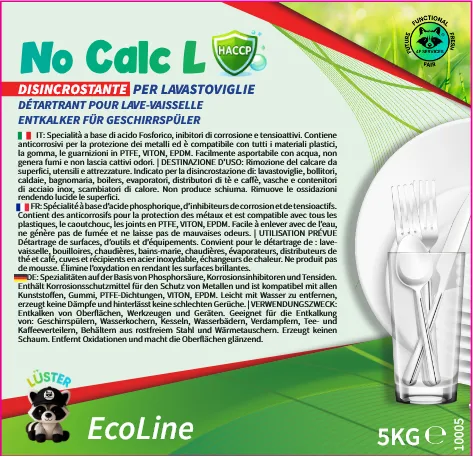
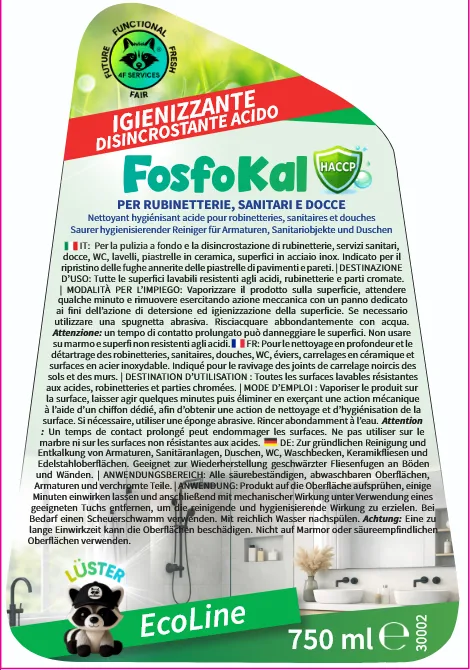
For taps and everyday sanitary ware a ready-to-use descaler like No Calc L is enough; for old scale or heavily used showers you need more strength like FosfoKal (never on marble or natural stone).
Surfaces you must NOT treat with acids
Marble, travertine, limestone and polished concrete contain calcium carbonate: an acidic descaler damages them permanently. On these surfaces use only neutral detergents. When in doubt, always test in a hidden corner.
Prevention: less work tomorrow
Drying shower glass and taps after use drastically reduces limescale build-up. In professional settings, a scheduled weekly descaling pass avoids heavy deep cleans. For machines (dishwashers, scrubber dryers), remember cyclic descaling: it protects heating elements and pumps.
FAQ
Can I use descaler on bathroom marble?
No: marble, travertine and limestone are corroded by acids. On these surfaces use only neutral detergents and water. Limescale on marble needs gentle mechanical action or stone-specific products.
How often should a hotel or gym descale?
With hard water we recommend a scheduled weekly pass on shower glass and taps, plus a monthly check of sanitary ware and drains. Prevention costs much less than restoration.
Does descaler damage shower seals?
Professional products, well diluted and rinsed, do not. Avoid prolonged contact with silicone and rubber: apply, leave for the indicated time and rinse thoroughly.