Anti-slip floors still feel slippery? Common mistakes and how Paigrip helps solve them
If an anti-slip floor stays greasy or loses grip, the issue is often the method. Here are the most common mistakes and how Paigrip helps.
Mistake 1: treating a microporous floor like a smooth surface
One of the most common mistakes is cleaning microporous porcelain stoneware or anti-slip flooring as if it were a closed, smooth surface. In reality, walked-in grease settles into the pores and can remain there even when the floor looks clean at first glance.
Paigrip is designed for exactly this issue: it penetrates the pores, dissolves embedded grease and helps restore the original grip of the surface. In kitchens and changing rooms, that targeted action is especially relevant because the problem is functional, not only visual.
Mistake 2: using the same dilution every time
Another frequent operational mistake is relying on a single dilution for every cleaning condition. In professional settings, soil load varies according to traffic, activity and cleaning frequency. A solution that is too mild may not be enough to remove grease trapped inside the floor texture.
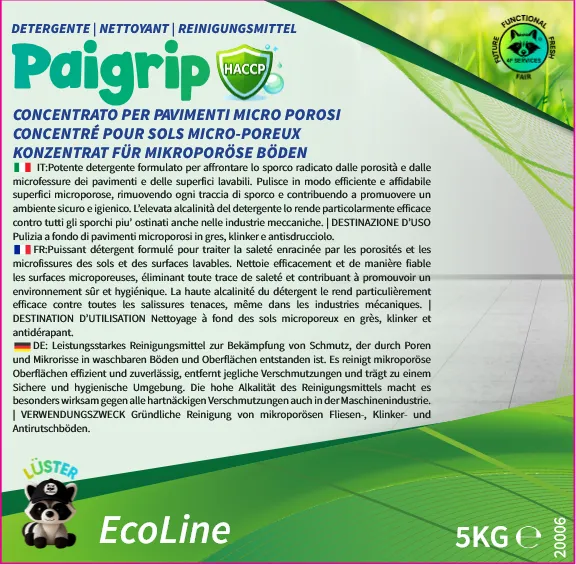
Paigrip allows a practical distinction between routine and intensive cleaning. The routine dilution is 20 ml per 1 litre of water, while the intensive dilution is 50 ml per 1 litre. Local water hardness should also be considered when preparing the solution.
Mistake 3: skipping the necessary contact time
When teams are under pressure, detergent is sometimes applied and removed almost immediately. On microporous floors, that limits performance because the product needs time to reach and break down grease lodged in the surface structure.
For stubborn soil, Paigrip should be left to act for 5 to 10 minutes. Respecting this contact time supports more effective cleaning, especially in critical areas such as kitchen walkways, service entrances and heavily used changing rooms.
Mistake 4: inconsistent daily maintenance
Many slip problems do not come from one isolated event but from the daily build-up of greasy residues inside the pores. If cleaning is only intensified occasionally, the floor may already have lost part of its anti-slip performance before action is taken.
Paigrip is intended for daily use and fits well into a consistent maintenance routine. Regular cleaning with the right dilution and contact time helps reduce operational risk and the responsibilities linked to slippery surfaces.
FAQ
Why can an anti-slip floor become slippery even if it is cleaned every day?
Because grease can build up inside the microporosities and may not be fully removed with a non-specific method. The floor looks clean but loses grip.
Is Paigrip only suitable for professional kitchens?
No. It is also suitable for changing rooms and, more generally, for microporous and anti-slip floors where walked-in greasy soil settles into the pores.
What is the most common mistake with this type of floor?
The most common mistake is treating it like a smooth floor. Microporous surfaces need a dedicated product, the right dilution and enough contact time.