
How to polish and protect marble without damaging it
Marble is beautiful but delicate: the wrong descaler ruins it forever. Here is the correct routine between neutral cleaning, protection and crystallisation.
Why marble goes dull
Marble is calcium carbonate: acids (even lemon and vinegar) corrode it chemically, leaving dull spots known as 'etching'. The dullness you see in corridors and entrances, however, is almost always mechanical wear: sand under shoe soles micro-scratching the polish.
Understanding the cause matters: acid corrosion cannot be washed away, it must be polished away. Wear can be prevented.
Rule number one: never acids on marble
No descalers, no acidic products, no acidic home remedies: on marble, travertine and limestone the damage is permanent. Even limescale residues on marble must NOT be dissolved with descaler: use neutral detergents and, in the worst cases, gentle mechanical action.
The correct routine: neutral every day
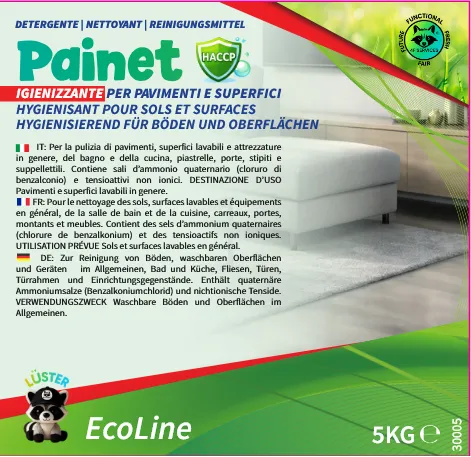
For daily cleaning use a neutral, low-foam detergent like Painet diluted at 0.2–1%: it cleans without attacking the polish. Dry or use little water: marble does not like standing water. Entrance mats reduce abrasive sand more than any product.
Protection and shine: wax or crystallisation
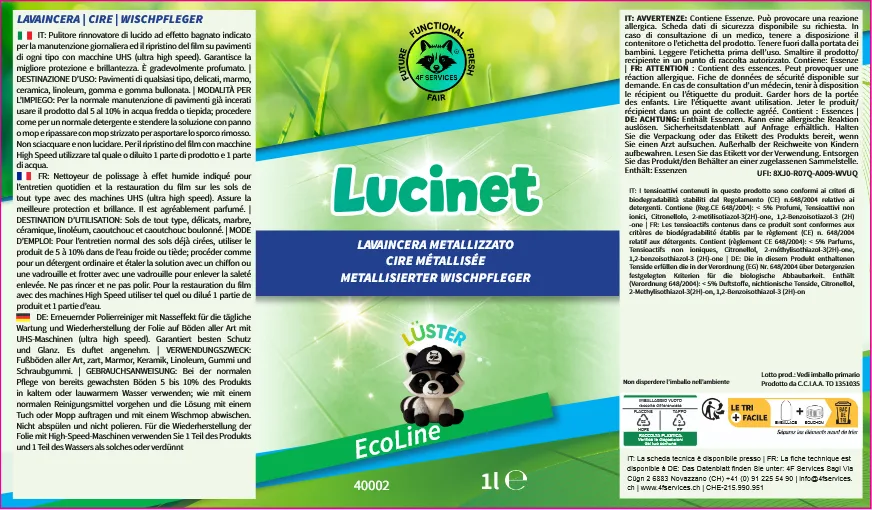
Two professional routes: waxing (a sacrificial layer to maintain with a wax emulsion like Lucinet at 5–10%) or crystallisation with a single-disc machine and specific pad, which chemically re-compacts the surface and restores deep shine. Crystallisation lasts longer but requires the machine: in the IPC catalogue you will find suitable single-disc machines and pads, with a quote within 24 hours.
FAQ
How do I remove limescale stains from marble?
Not with descaler: it would ruin the surface. First try a neutral detergent and a microfibre cloth; if the limescale is encrusted, mechanical polishing with a single-disc machine and crystallising powder is needed. Prevention through drying is the cheapest route.
Wax or crystallisation — which is better?
Wax is simpler and cheaper but must be renewed and builds up in layers; crystallisation lasts months, creates no layers and restores deeper shine, but requires the single-disc machine. For high-traffic corridors we recommend crystallisation.
How often should marble be polished in a hotel?
It depends on traffic: generally crystallisation every 3–6 months in passage areas, with daily neutral maintenance. A well-maintained floor needs less frequent and less invasive polishing.